
Menu
Seasonal Pruning Tips to Keep Kenmore Trees Safe
Tree Pruning Kenmore
Strategic tree pruning throughout the year protects Kenmore properties from storm damage while maintaining the natural beauty that defines neighborhoods from Log Boom Park to the Sammamish River. Understanding when and how to prune different species ensures healthy growth patterns and reduces safety hazards during Pacific Northwest weather events.
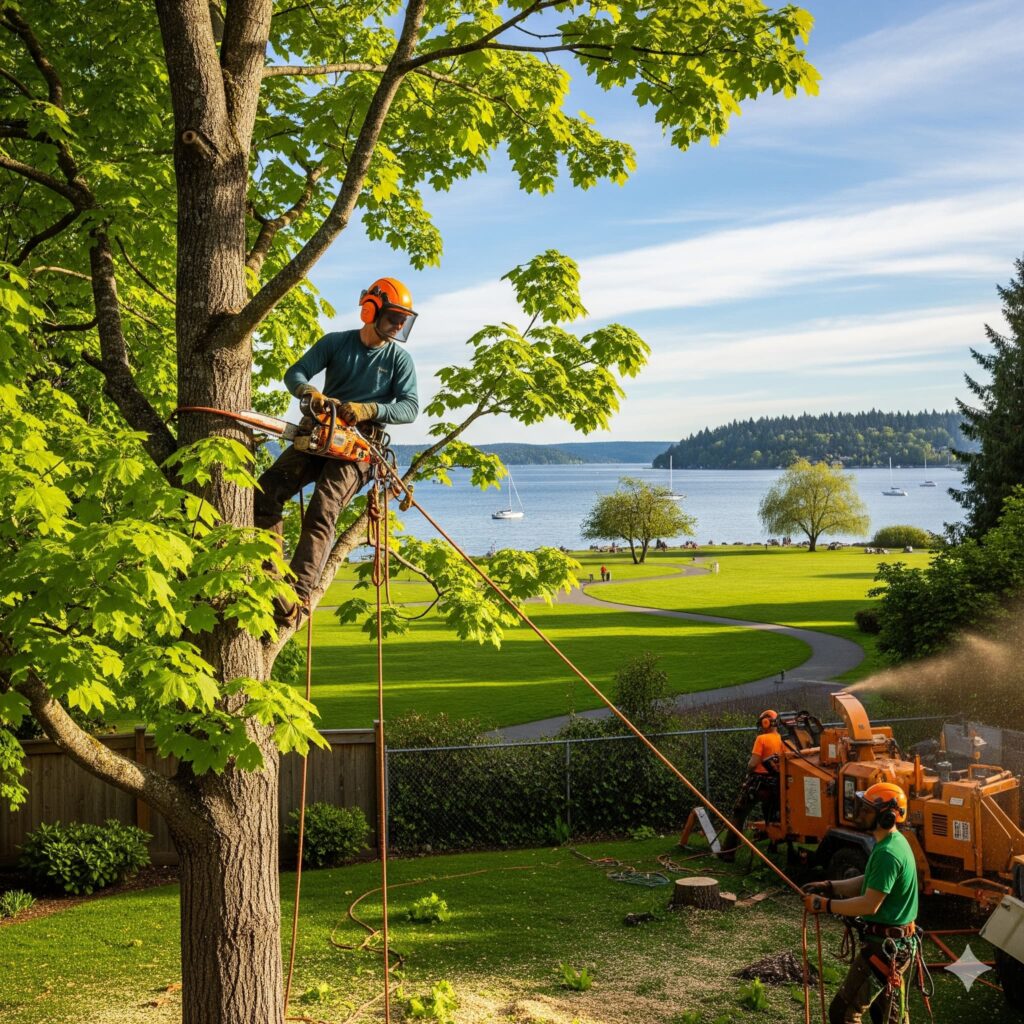
Winter Pruning: Foundation for Healthy Growth
The best time to do large-scale tree pruning is late winter; this is because most trees are still in a state of dormancy and have less opportunity to spread disease. The area surrounding Saint Edward State Park will greatly benefit from winter tree pruning, which eliminates the problematic limbs prior to new growth occurring in the spring.
Benefits of Dormant Season Pruning
Pruning trees in the dormant season is much less stressful for the tree and allows you to clearly see how your tree is structured (without leaves). Additionally, you can provide the tree with an ideal environment to grow vigorously in the spring while also limiting the amount of “bleeding” seen in Maple and Birch trees, two species found commonly in Kenmore’s residential properties.
Pruning in the Spring
In early spring, tree pruning is focused on removing any damage caused by winter, as well as making precise cuts before the tree begins to grow again. In addition to other properties, those located along the Burke-Gilman Trail require special attention to remove any branches damaged by recent storms that may be a hazard to pedestrians.
Species-Specific Timing for Pruning
Each tree species responds optimally to pruning at a specific time. For example, oak trees should be pruned in late fall or winter to minimize the risk of oak wilt spreading to other oak trees. Also, flowering trees need to be pruned after they finish blooming in order to allow them to produce flowers for the following year.
Pruning in the Summer
Minor pruning during the summer months addresses any immediate safety concerns and helps to reduce the stress of actively growing trees. Many of the properties surrounding Bastyr University require summer attention for branches encroaching upon buildings or utility structures.
Reducing Water Demand
By removing excess foliage through summer tree pruning, you help to lower the amount of water your tree demands, thereby enabling it to better endure dry spells. This approach is especially beneficial for older trees found in Kenmore’s diverse terrain and soils.
Preparing for Fall Weather Conditions
By removing any weak, damaged, or poorly attached branches through autumn tree pruning, you prepare your trees for the coming winter storms. Proactively removing hazardous branches can save you from potential property damage and keep your trees healthy throughout difficult weather conditions.
Preventing Storm Damage
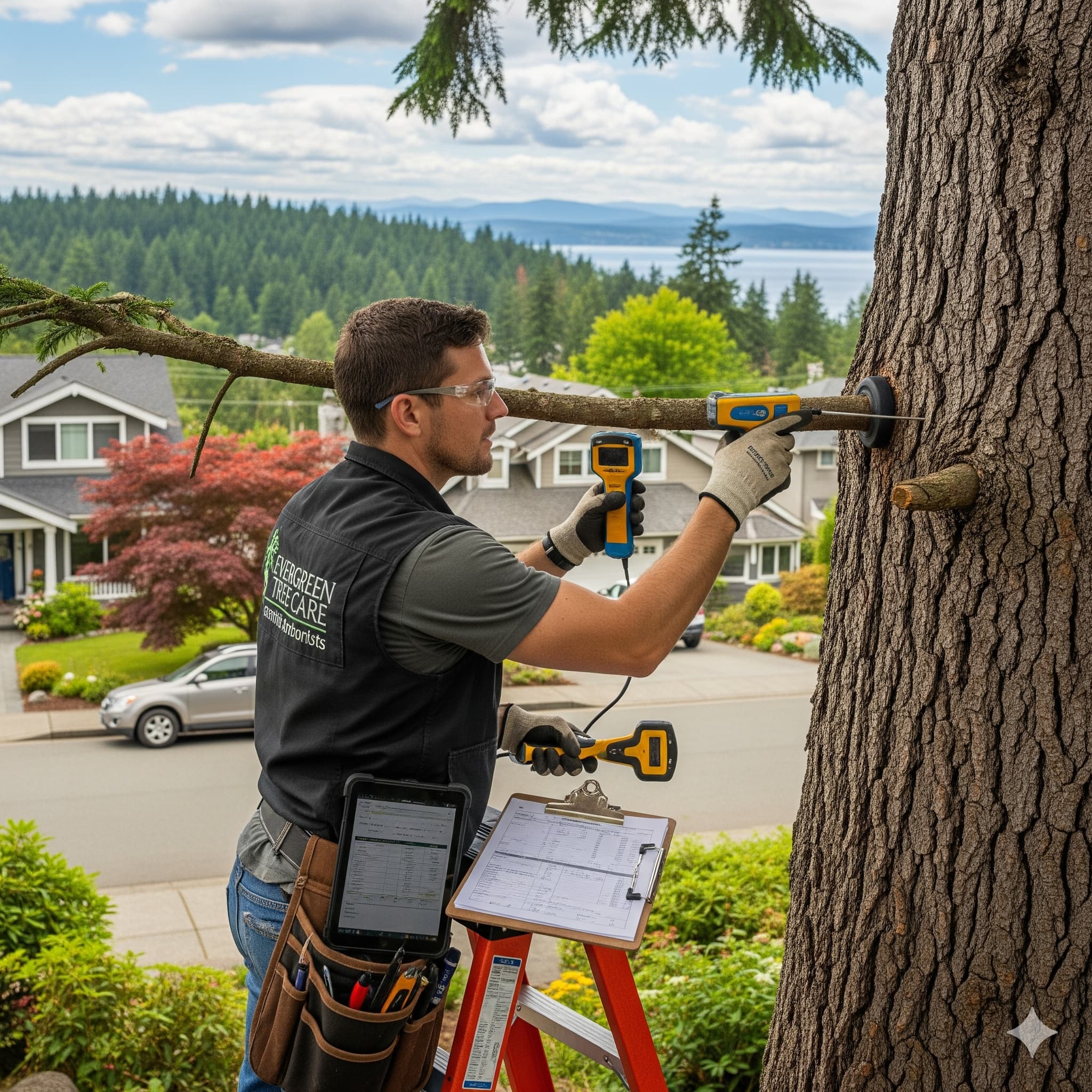
Through a professional assessment, we identify branches that are most likely to break off during winter storms, and then remove them to eliminate potential hazards. As certified arborists with experience in assessing hazards and safely removing branches, Tree Service Experts Kenmore offers customers the ability to remove hazardous branches before damage occurs.
Safe Pruning Techniques
Applying the correct tree cutting techniques promotes the tree’s ability to heal quickly and correctly while preventing disease from entering the tree and potential structural problems. To assure long-term health and stability of the tree, understanding the anatomy of the branch collar and applying precise cuts are both key components of proper pruning techniques.
Benefits of Using the Three-Cut Method
When removing larger branches from a tree, there are certain techniques that must be applied to prevent damaging the bark and to encourage proper healing. Professional arborists use a three-cut method to maintain the integrity of the tree while safely and efficiently removing branches.
Prioritizing Safety-Focused Pruning
While focusing on eliminating hazards to people and property, tree pruning in Kenmore also aims to maintain the natural shape of the tree. By doing so, homeowners can preserve the aesthetic value of their trees while minimizing liability risks.
Providing Proper Clearance
By maintaining the proper clearance from structures, power lines, and walkways, homeowners can avoid conflicts and encourage healthy growth patterns. Homeowners near Rhododendron Park will also appreciate our expert advice on clearance standards and recommended maintenance schedules.
Selecting and Maintaining Your Tools
Using high-quality pruning tools ensures that you make clean cuts that promote proper healing and limit the transfer of disease between trees. Keeping your tools sharp and sanitized ensures that you achieve professional-looking results while protecting the health of the trees being pruned.
Equipment Quality and Safety
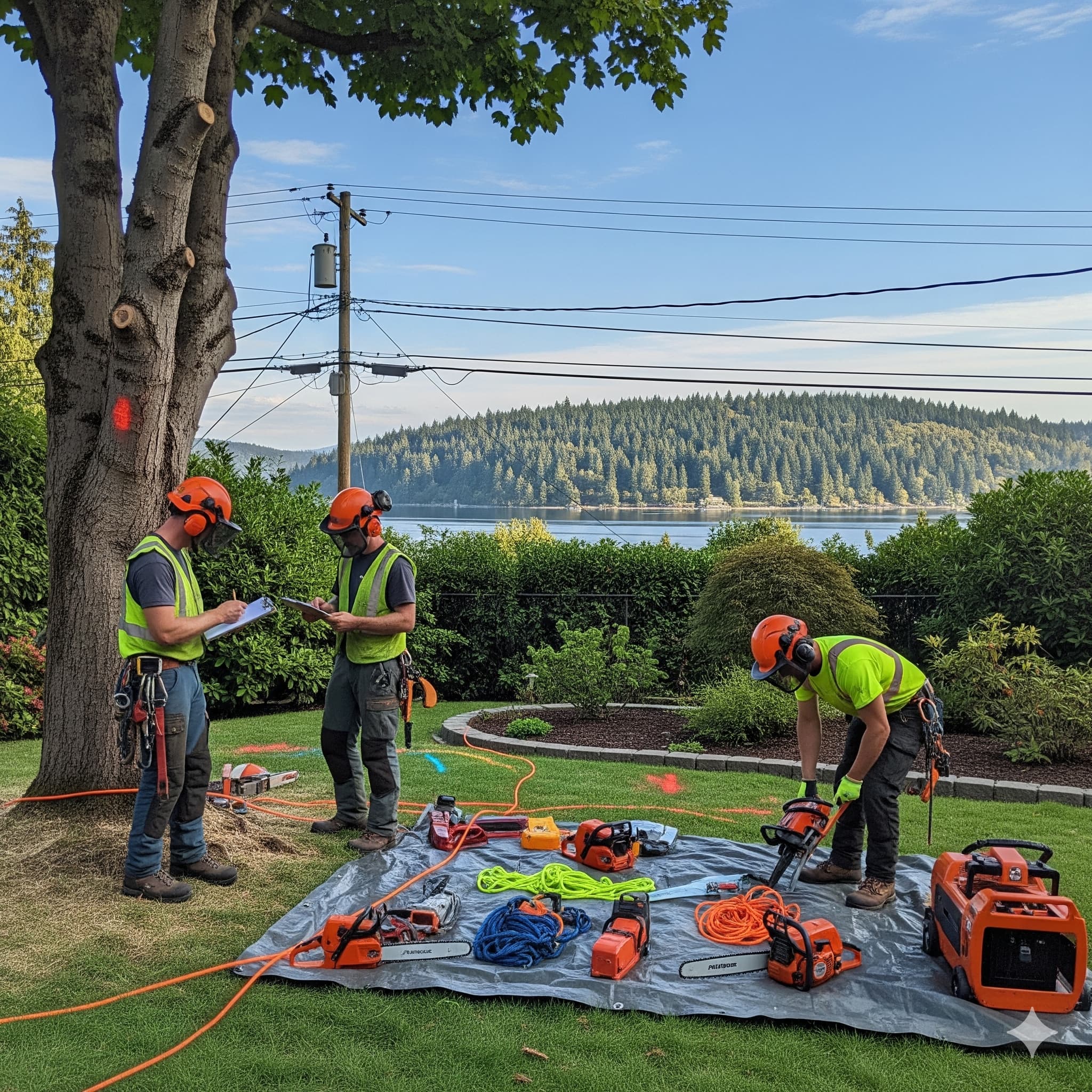
Certified arborists use high-quality, specialized tools such as pole saws, chainsaw systems, and precision hand tools that are specifically designed for various cutting tasks. Investing in high-quality equipment will result in superior outcomes while also maintaining operator safety.
Training Young Trees
Performing structural pruning during young trees’ developmental stages sets up the foundation for strong branching architecture to withstand the challenges posed by PNW weather conditions. Performing corrective work on young trees is expensive compared to providing the necessary training during their developmental stages to establish good growth habits.
Strategies for Selective Branch Removal
As part of the pruning process, certified arborists select permanent scaffold branches while removing competing leaders and poorly-positioned growth. By doing so, mature trees develop sturdy structures that can handle heavy snow and ice loads.
Maintenance of Mature Trees
While mature trees require pruning, the type of pruning performed differs from that done on younger trees. Instead, the focus is on crown reduction, deadwood removal, and selective thinning to maintain the overall health of the tree while lowering its wind resistance.
Preserving Mature Trees
As part of the pruning process for mature trees, certified arborists emphasize minimal interference with the natural form of the tree while addressing any specific safety or health concerns. This approach maximizes the lifespan of mature trees.
Utility Line Considerations
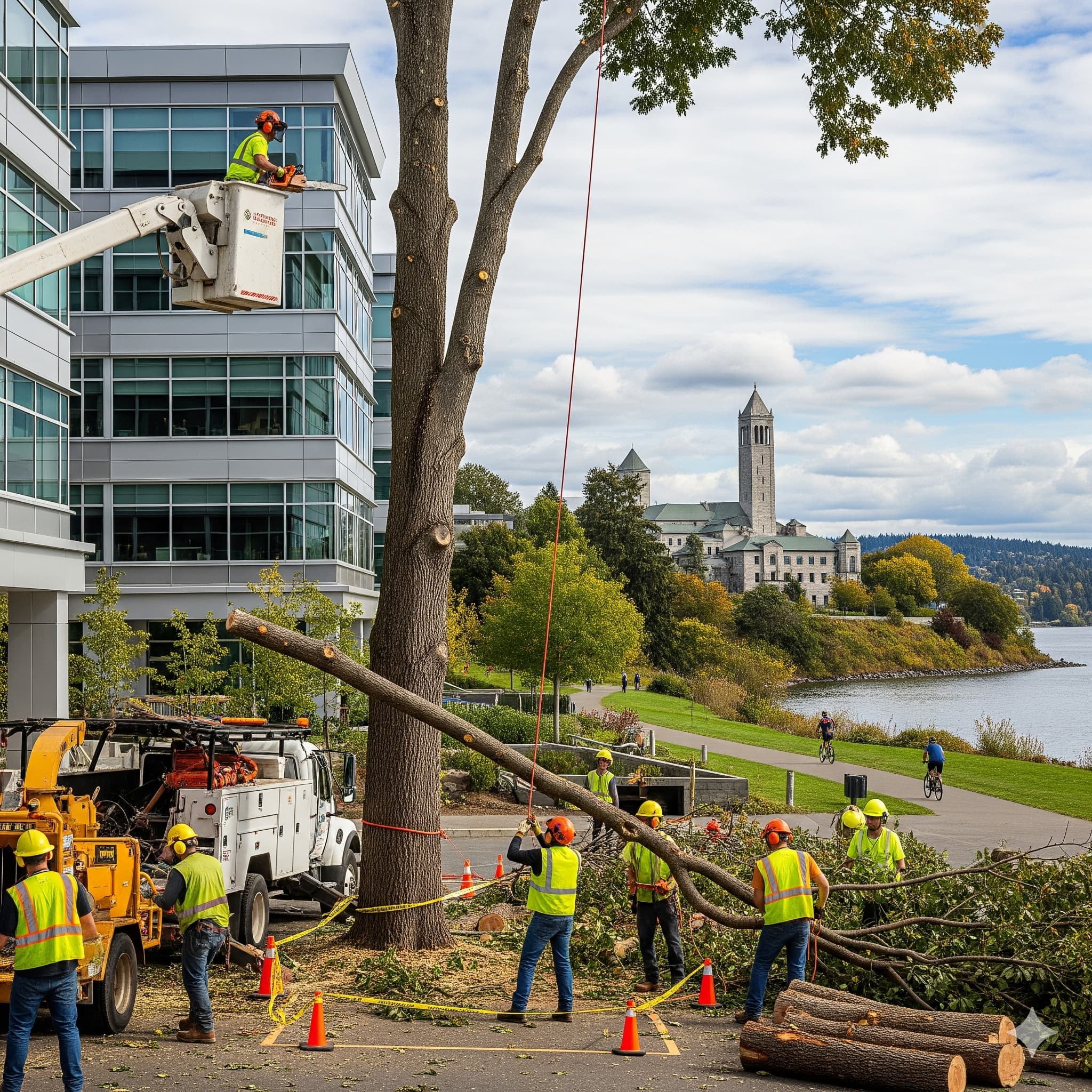
Trees that are growing near power lines require special pruning techniques to maintain electrical safety while preserving the health of the tree. Certified arborists will coordinate with utility companies to ensure that pruning meets all applicable codes and regulations while preserving your valued landscaping features.
Regulatory Compliance
Kenmore has many tree ordinances that govern pruning near utilities and in public spaces. As certified arborists, we are familiar with the regulations and provide compliant tree care solutions for our customers.
Disease and Pest Prevention
Improving air circulation and sunlight penetration through strategic tree pruning creates an environment that discourages fungal diseases and pest infestations. This preventative approach can minimize the need for treatments and stimulate the tree’s natural defenses.
Clean-up and Debris Disposal
Proper clean-up and debris disposal are included as part of the pruning service provided by certified arborists. We want to support community tree health while protecting individual investments in landscaping features.
Expertise in Arboriculture
Certified arborists bring expertise in species-specific requirements, safe pruning techniques, and regulatory compliance to provide high-quality results. With both local knowledge and professional standards, Tree Service Experts Kenmore delivers safe and efficient pruning services.
Seasonal tree pruning is an important aspect of tree maintenance that not only protects homeowners’ investments in their trees but also maintains the natural beauty of the landscape that makes Kenmore neighborhoods appealing to families and nature lovers alike.
LATEST POSTS