
Menu
Storm Preparedness: Protecting Your Trees from Kenmore's Wild Weather
Protecting Your Trees from Kenmore's Wild Weather
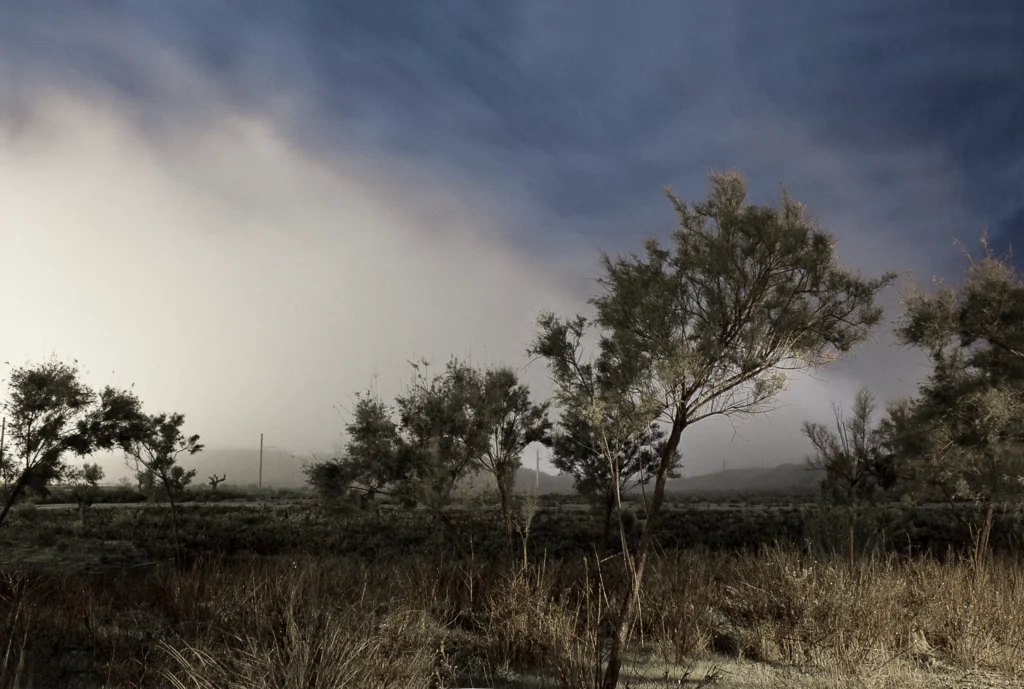
Kenmore’s proximity to Lake Washington and the Puget Sound means we often experience strong winds and heavy rains, particularly during fall and winter storms. Preparing your trees for these weather events is crucial for their survival and the safety of your property. Here’s a comprehensive guide to storm-proofing your trees:
Regular Pruning
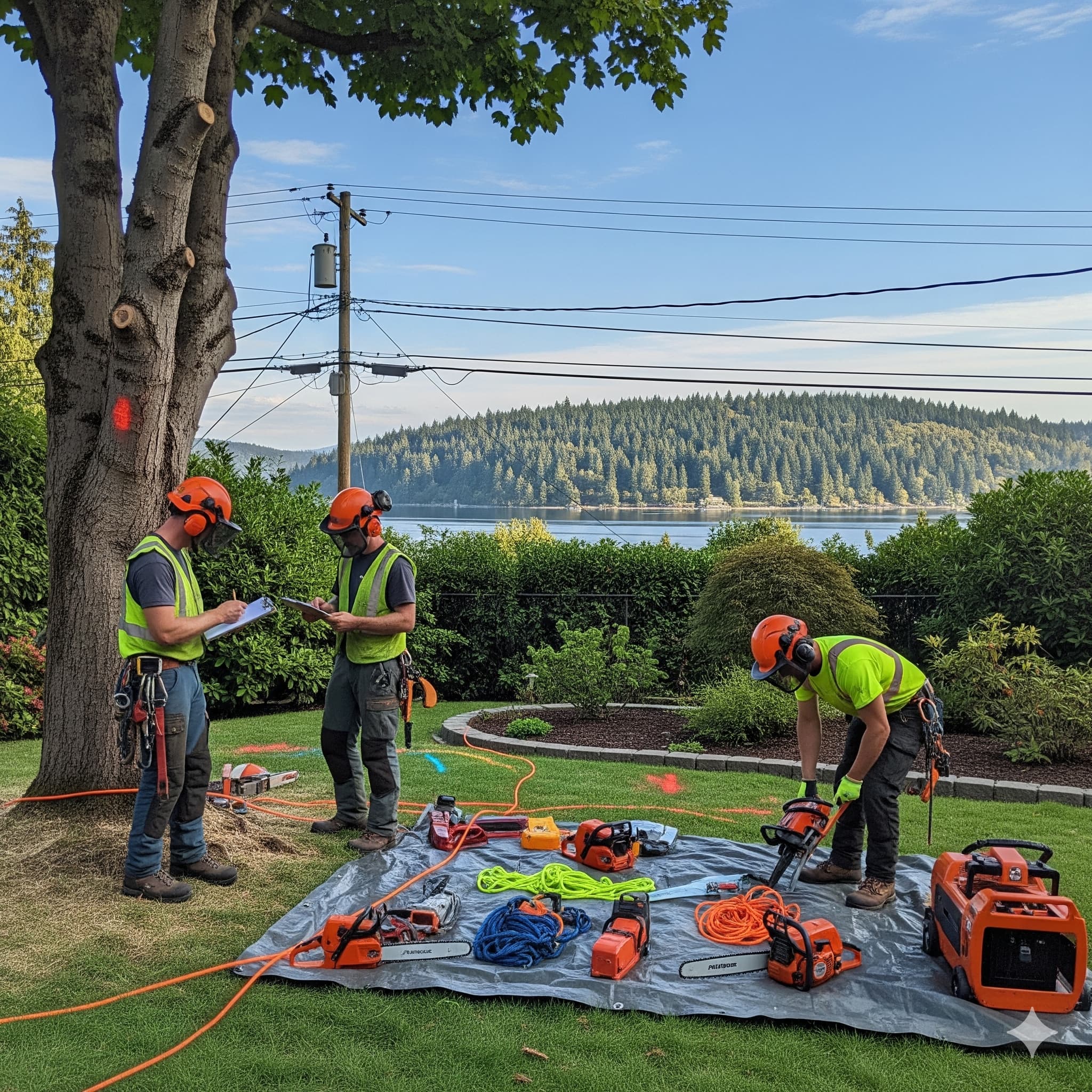
Regular pruning will help to protect your Kenmore trees from storm damage by removing weak, dead, or damaged branches before storm season begins. This will also thin out the canopy, making it easier for wind to pass through as well as ensuring balanced growth so there isn’t an overgrowth of one side versus another. Topping your trees should be avoided at all times because this can cause weak and unstable growth of the remaining branches. For larger trees or those growing near other structures, a certified arborist will likely need to be hired.
Structural Support
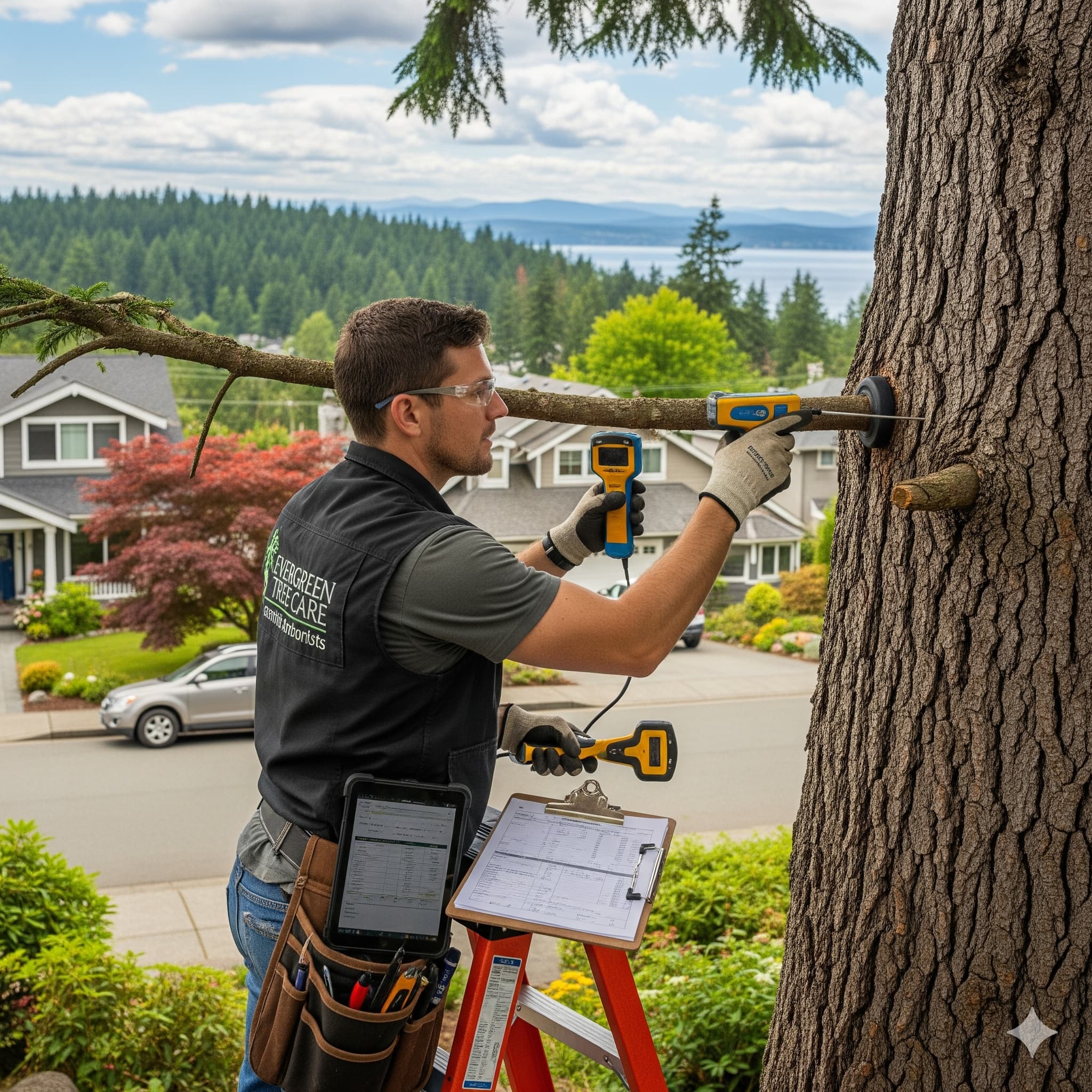
- Before storms begin, have a certified arborist inspect your trees to determine if there are any weak union points in the branches or if there are two main trunks (co-dominant) growing off of the same point.
- If your tree has structural problems, cabling or bracing may be required. Use flexible cable systems that do not restrict the normal movement of the tree.
- Lightning protection systems should be installed for tall trees that are located far away from others.
- Supports should be installed by a certified arborist and then regularly inspected to ensure their effectiveness.
Proper Hydration
- Consistent soil moisture should be maintained throughout the year, but particularly during dry periods. Trees that are drought-stressed are much more susceptible to storm damage.
- Mulch should be used to maintain consistent soil moisture levels as well as to control soil temperatures.
- Installing a drip irrigation system will make it easy to water your trees efficiently.
- Water your trees consistently according to rainfall amounts and your tree’s specific needs.
Wind-Resistant Planting
- Native species should be chosen based on the amount of wind in the area where you live.
- Trees planted in groups will provide each other with protection from the wind.
- When selecting the location to plant a tree, choose a location that takes into consideration the mature size and root spread of the tree.
- Large trees should never be planted too close to buildings or electrical transmission lines.
- In high-wind areas, consider using wind-resistant species such as shore pine or Garry oak.
Regular Professional Assessment
- Schedule an annual inspection of your trees with a certified arborist.
- This will enable you to identify any potential hazards before they become emergencies.
- The certified arborist will be able to assess the soil conditions, root health, and overall tree vitality.
- Create a long-term maintenance plan for your trees based on the results of your assessment.
- Immediately address any signs of disease or pests on your trees.
Emergency Preparedness
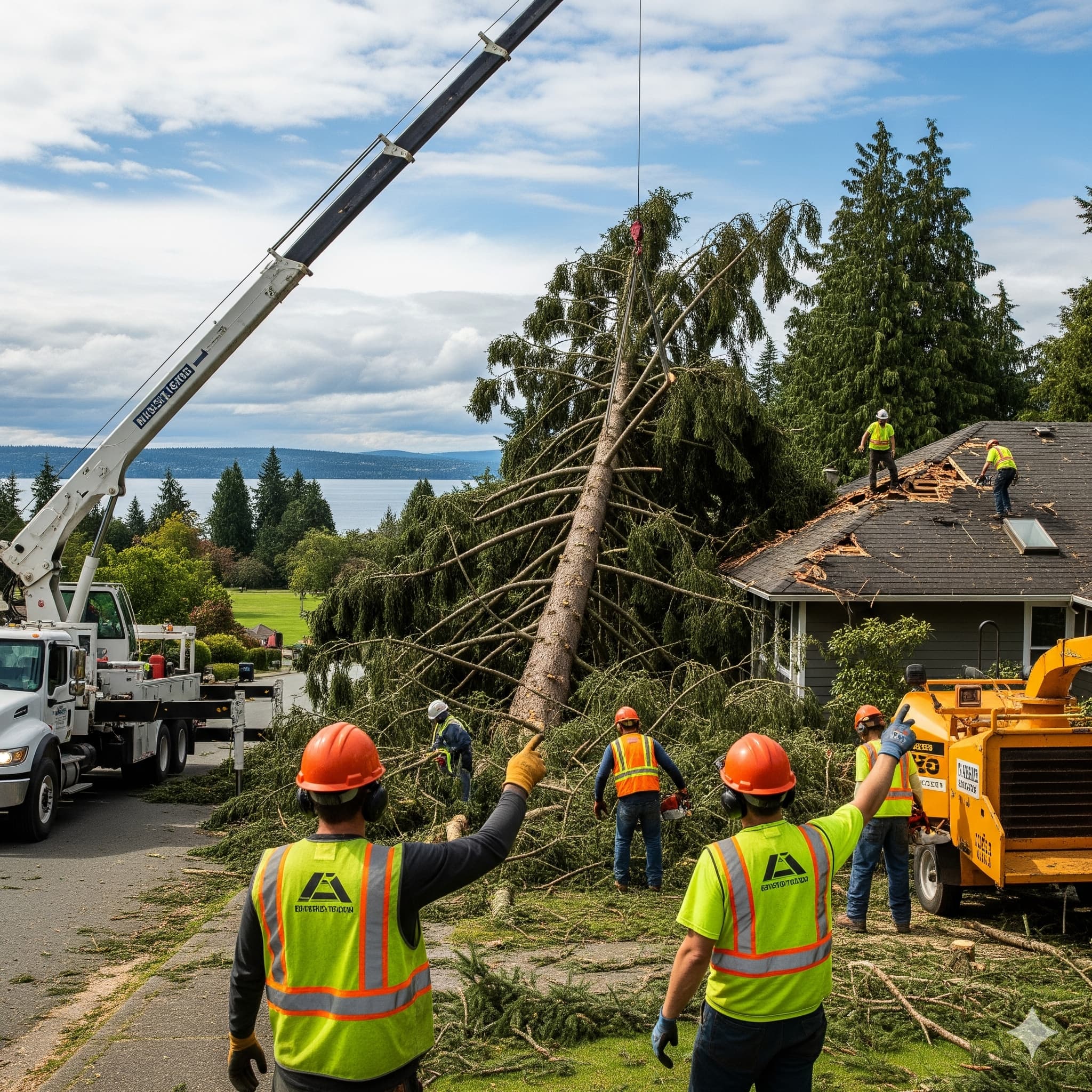
- Develop a plan for the clean-up of debris that will occur after a storm.
- Save the phone number of a 24-hour emergency tree removal company in case of a severe storm.
- You should know how to safely evaluate any damage to your trees after a storm.
- Recognize the warning signs that a tree may be a fall hazard.
- Be aware of what is covered under your homeowner’s insurance policy regarding damages caused to your home and surrounding property due to fallen trees.
Root Care
- Never compact the soil around your trees, as this can damage the roots and create less stability for the tree.
- Protect your tree’s roots from being damaged during construction projects.
- Air spading or vertical mulching can be performed to improve the aeration of the soil for stressed trees.
- Perform routine testing of the soil pH and nutrient balance to ensure that the soil is providing the necessary nutrients to sustain the life of the tree.
By utilizing these techniques, you can greatly decrease the chance of having a tree fail during the stormy months in Kenmore. While performing your own maintenance is essential, some tasks will be best left up to professionals. Our team of certified arborists is always available to inspect your trees and offer recommendations on how to prepare them for storms.
LATEST POSTS